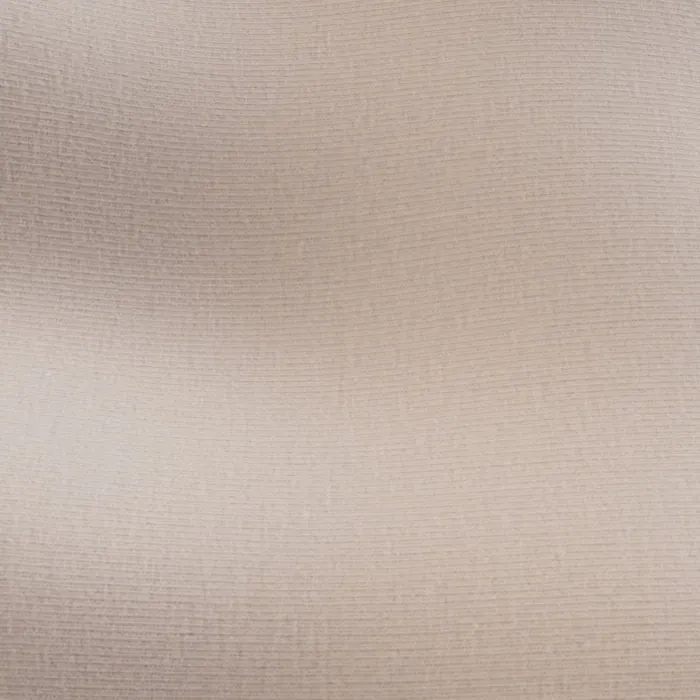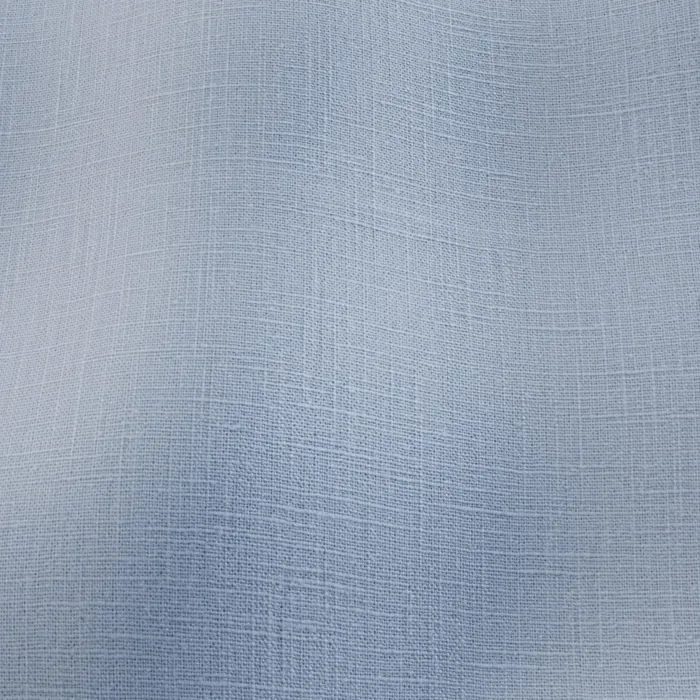
Denim
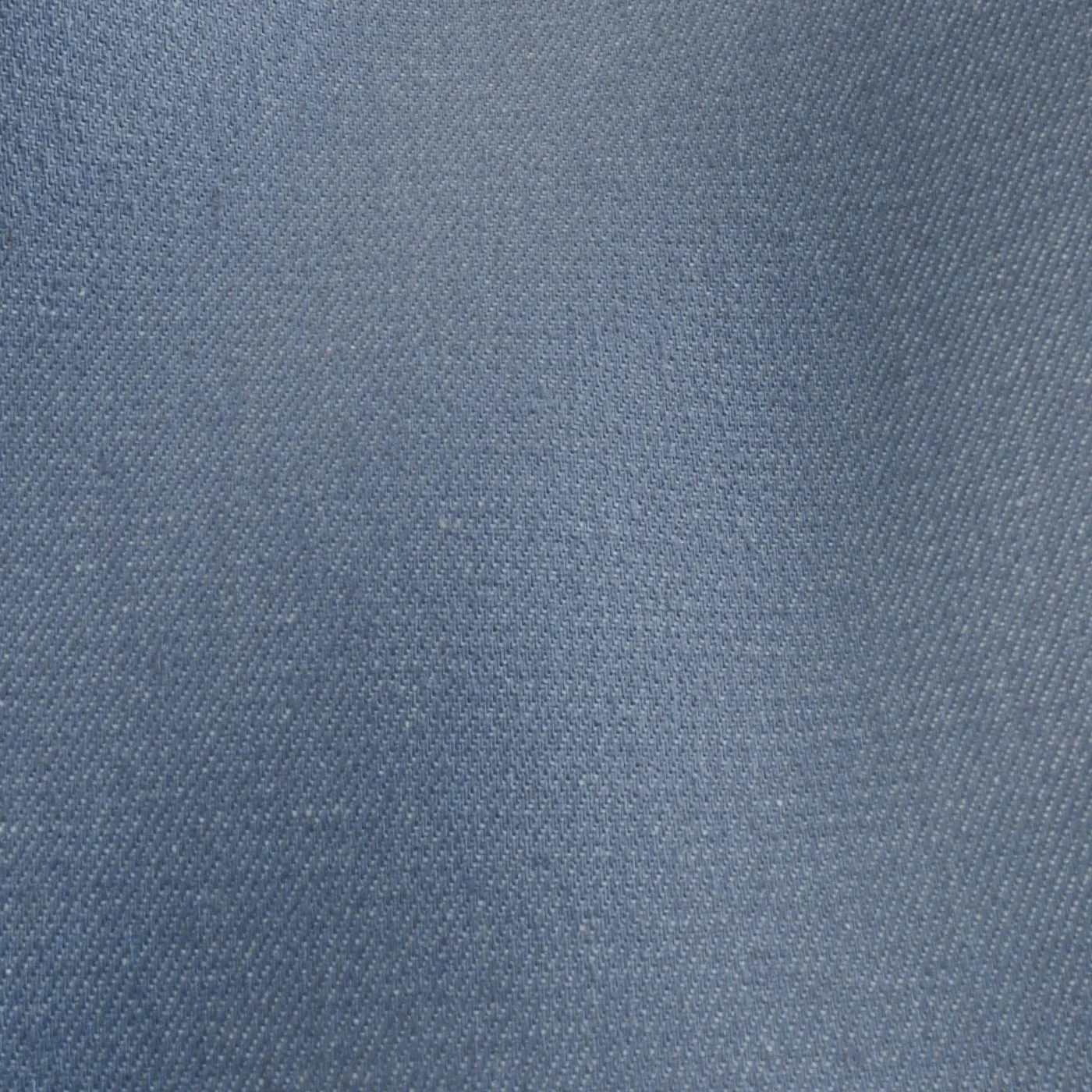
A tough cotton twill with an indigo warp. The way it's woven explains almost everything about how it looks and ages.
 Drag to stretch
Quick facts
- Fibre
- Cotton; stretch denim adds up to about 3% elastane
- Construction
- Warp-faced twill weave
- Stretch
- None (rigid) to moderate (stretch denim)
- Drape
- Stiff at first, softens and shapes to you with wear
- Moisture
- Absorbent, but heavy denim is slow to dry
- Typical weight
- 370–475 GSM — what GSM means
What it is
Denim is a sturdy, warp-faced cotton twill [1]. In a twill, each weft thread passes under two or more warp threads, and that offset, repeated row after row, creates the diagonal ribs you can see on any pair of jeans [1].
Why jeans are white inside
In most denim only the warp threads are dyed blue with indigo; the weft threads stay white. Because the weave is warp-faced, the outside is mostly blue and the inside mostly white [1].
Why it fades the way it does
Indigo sits mainly on the outer surface of the yarn. As the surface wears, the lighter core shows through — which is why fading appears first at the knees, along the seams and around the pockets [1].
What the weight means
Denim weight is quoted in ounces per square yard. Most denim is around 11–14 oz [1]. Since 1 oz/yd² is about 33.9 g/m², that’s roughly 370–475 GSM — far heavier than a T-shirt, which is why denim feels structured and takes time to dry.
Stretch and selvedge
- Stretch denim replaces up to about 3% of the cotton with elastane, letting the fabric stretch by up to around 15% [1]. More comfort, but it can lose shape over time.
- Selvedge denim is woven on traditional shuttle looms, which leave a neat, self-finished edge, often marked with a coloured thread. It is generally considered premium [1].
Sources
Written by the Vibe Studio. Last updated .